Jennifer Obsuth

A Trauma-Informed Survival Guide for COVID-19

by Tara Chalakani, PsyD, LPC, RN. The recent crisis of the coronavirus pandemic has sent shockwaves throughout the world. One thing we can agree upon is that no one has ever experienced anything like this before. COVID-19 is unlike any pandemic, natural disaster, or war, for that matter, that we have ever encountered. However, one thing we all have in common is that this is a shared traumatic event. Many of us have lost our incomes, favorite places we frequented, the ability to socialize, or worse, the life of someone we cherish. The definition of trauma is “…an event, series of events, or set of circumstances that is experienced by an individual as physically or emotionally harmful or life threatening and that has lasting adverse effects on the individual’s functioning and mental, physical, social, emotional, or spiritual well-being (SAMHSA, 2019).” In late 2018, Preferred Behavioral Health Group (PBHG) began an organization-wide implementation of trauma-informed care (TIC). This required an entire year of training every employee about what trauma is, how it affects people, and how to engage people in a manner of “what’s happened to you?” vs. “what’s wrong with you?” Approaching someone in a trauma-informed manner simply means that you acknowledge the other person has experienced trauma at some point in their life. I like to say it means being “warm and fuzzy” with everyone you interact with versus “cold and prickly.” When we agree that everyone is fighting a battle we know nothing about, it creates a deeper sense of compassion and empathy. Since being quarantined, I notice when I take my daily walk, I am smiling more at my neighbors and passersby, making intentional eye contact, and saying “Hello, how are you?” (from a distance of course). I consider myself a nice and friendly person in general, but why am I going out of my way now? Because I know for certain that we are all trapped in our homes and struggling in some way. COVID-19 is a shared traumatic experience. So, as you go about your day amidst the “new normal,” consider these trauma-informed tips to help you survive: Make sure you check in with one person you hold dear every day. Social distance is not social disconnection. Treat yourself with kindness and take care of yourself. You cannot take care of anyone else unless you practice self-care. Do one thing every day that you really enjoy. Make sure you get fresh air and move (a 10-minute walk can boost your mood for hours) Seek help if you need it. Mental health providers offering telehealth and telephonic supports are a call or click away. For more information or to seek help, call us at 732-367-4700. In peace and health, Dr. Tara Chalakani, PsyD, LPC, RN April 9, 2020

A Trauma-Informed Survival Guide for COVID-19 Read More »

How You Can Help

April 7, 2020. We are currently living amidst very challenging times. People struggling with mental illness and substance use issues are faced with even greater challenges. During this pandemic, we have had to change the “how” in our approach, but we are connecting regularly with children, teens, adults, veterans and seniors more than ever before. We need your help. We are asking our community to help support others by donating gift cards which will directly help people struggling to meet their basic needs in Monmouth and Ocean counties: Our front-line staff have identified local retailers that best meet our clients’ needs. Gift cards can be sent electronically to us or by mail. Here are the four with links to the web pages: Direct an electronic gift card on to:  Judy Daniels at: jdaniels@preferredbehavioral.org Send a gift card by mail to: Judy Daniels, Preferred Behavioral Health Group, 700 Airport Road, Lakewood, NJ  08701. You can choose a specific program to support if you would like to in the comments section. For questions, contact Judy Daniels at jdaniels@preferredbehavioral.org. Thank you. Together we can do more.

How You Can Help Read More »

We’ve Been Here For Over 40 Years and We Are Here Now!

March 25, 2020. Greetings from Preferred Behavioral Health Group. It’s a challenging time for all of us. And for people struggling with mental illness and substance use issues, the challenge is even greater.While we have had to change the “how” in our approach, what we have not changed is the passion and compassion we bring to those we serve. We are still connected. With over 70 different programs, our approaches vary. Our group homes remain open and our emergency mobile response team will make crisis intervention home visits if necessary. Our casemanagers, school-based staff, drug and alcohol counselors, social workers, peer specialists and therapists are all in regular consistent phone or video contact with our clients. Those with medication needs are being monitored and getting the prescriptions they need. We continue to partner with local law enforcement, state government, mental health and substance use providers, and others to ensure that those that are vulnerable are getting the help and care they need. Stay connected with us through our social media outlets and our website. We thank you for your ongoing support. Together, we will get through this! Mary Pat Angelini and the PBHG Family

We’ve Been Here For Over 40 Years and We Are Here Now! Read More »

Important Announcement

We are adapting our services but are still here for you! Following guidelines by the federal and state government to help prevent the spread of Covid-19, the Coronavirus, Preferred Behavioral Health Group is implementing major changes in the way we are operating over the next few weeks. Effective Wednesday, March 18, most of our buildings will be closed to staff, consumers, clients, and visitors. Our group homes and Children’s Mobile Response program will continue to be operational. Plans are in place to support you remotely and to continue to support those in need in our communities.  Please reach out to your therapist, clinician, or case manager for details on your specific situation. The current intention is to resume our normal operations on April 2nd. For any questions or concerns, call us at 732-367-4700. If you are in a crisis and need immediate assistance, please call:  Monmouth County: 732-886-4474 or 911 Ocean County: 866-904-4474 or 911 We will keep you updated on this page and via our social media channels. This is an unsettled time for all of us; please continue to take care of yourself and those you love.

Important Announcement Read More »

Feeling Stressed or Anxious about Covid-19?

Everywhere we turn, we hear about it. It’s the number one topic of conversation. It’s on the news 24/7. It’s being talked about at work, in supermarkets and stores – with friends and strangers. It may even be impacting your travel plans, job locations, and financial situation. How to cope? It’s a stressful situation for all of us. And for those dealing with the challenges of anxiety, it can be magnified. One of the most important things you can do is to stay informed, but don’t stay glued to the news. You want to stay up-to-date, but focusing on other positive activities will help manage your stress. Use credible sources for your information so you know you are getting the true facts (see below). It’s also critical to know your own signs of stress and when to get help. Stress reactions can be both physical and emotional. By paying attention to your body, emotions, and behaviors, you can recognize the signs and take steps to feel better. Click here for the information we are sharing with all of our staff, clients and consumers, and below are links we have compiled to reliable sources for news and stress coping strategies that we recommend. Sources for Reliable News: Centers for Disease Control – most current information World Health Organization – protection tips, travel advice, faq’s Guidelines for Stress Management: Substance Abuse and Mental Health Services Administratio (SAMHSA) guidelines for coping with stress, including signs of stress and stress relieving techniques. Click Here for English and Click Here for Spanish. SAMHSA guidelines for social distancing, quarantine, and isolation. Click here for English and Click Here for Spanish Guidelines for Helping Families Cope: The National Child Traumatic Stress Network – Includes readiness, reducing your family’s risk, coping with stress, and scheduling and activities. Click here. Follow us on our social media outlets for our Coronavirus response updates. Facebook: @PreferredBehavioralHealthGroup Twitter: @PBHGNJ Instagram: @preferredbehavioral LinkedIn: Preferred Behavioral Health Group

Feeling Stressed or Anxious about Covid-19? Read More »

Meet the In-Home Recovery Program Team

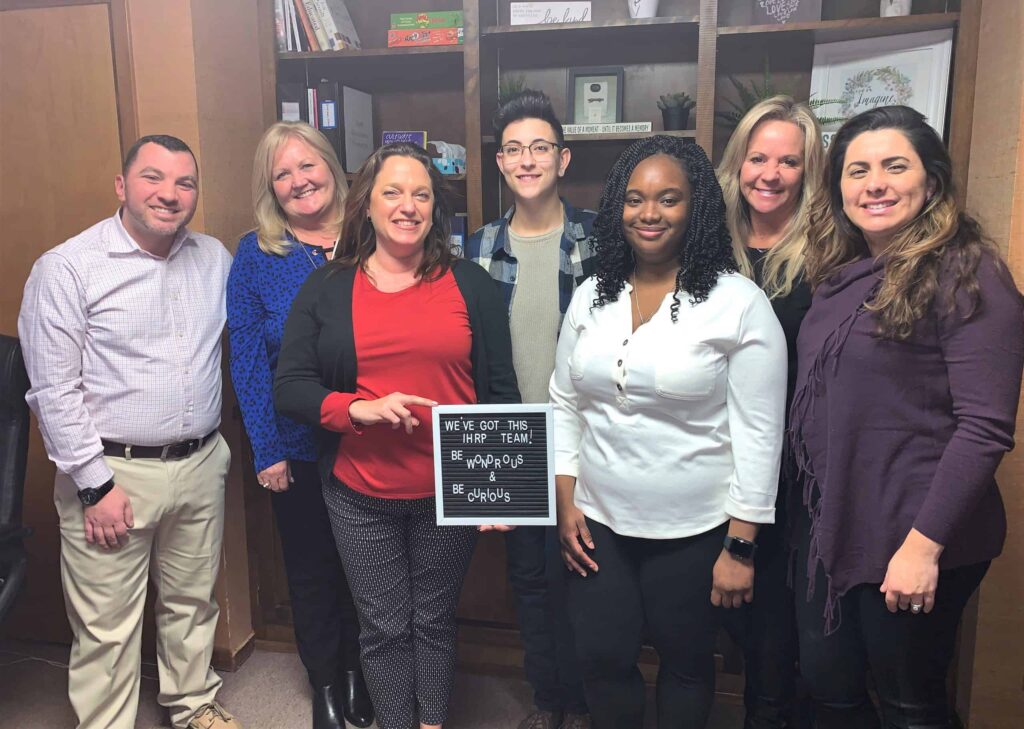
January 2020—Ocean County. The Team: David, Liz, Anna, Jess, Christina, Deb, and Juliany. Preferred Behavioral Health Group’s new In-Home Recovery Program (IHRP) is now fully staffed, trained, and accepting new families into the program. Families are referred through the New Jersey Department of Child Protection and Permanency (DCP&P). In their own words this IHRP team is “ready, versatile, diverse, educated, funny, empathetic, patient, and inquisitive!” Funded through a grant by The Nicholson Foundation, and supported by Rutgers University, Yale Child Study Center and the New Jersey Department of Children and Families , the program is the first of its kind in New Jersey. The mission is to provide the support needed for children to remain in their homes together while parents are receiving treatment for substance use disorders. Based on a successful model from Yale University that has since expanded into 17 areas in Connecticut  and two areas in Pennsylvania , the intensive program in Ocean County will provide individual and family therapy, weekly social club groups, regular drug testing, child development support , introductions and connections to community resources, and more. “We know that removing children from their homes and families can be traumatic and can leave lasting effects throughout life. This program seeks to keep families together by helping the affected parents navigate through their recovery, while increasing their awareness and understanding of their child’s development and promoting positive parent – child interaction for secure attachment.” Liz Savino, IHRP Program Director This pilot program is also a research study and will be assessed and evaluated throughout the term of the grant by a team of researchers through Rutgers University.  The program is set up with 2 teams of 3 staff members. Each team has 2 licensed clinicians and one family support specialist. There is also a part-time psychiatrist who is available to assist with medication management. Each team will work with 12 families for a period of one year. The average length of treatment is 6 months. The counselors will provide substance use treatment and child/parent relationship counseling. The family support specialists will help the families gain access to resources in the community as well as support their substance use treatment and the development of the child/parent relationship. The families in the program will have access 24/7 for crises and emergencies and will have phone access to their team members daily. The team members are all deeply committed to the program. They share a space and collaborate regularly. Each of the 2 teams have a name: “Team Wondrous” and “Team Curious”. The team names came as a result of a brainstorming session about the Yale treatment model.  Because the program is focused on the client, the team members will provide help and support based on the specific needs of the client – using language such as “I wonder how you…” and “I’m curious what you think about…”. After spending months developing the program and getting the necessary training, the team members are anxious to begin making an impact. When asked to use one word to describe this new program, here are few words that they offered:  “Hope,” “Journey,” “Unique,” “Compassionate,” “Opportunity,” “Judgment-free,” “Vigilant,” and “Supportive.” For more information on the In-Home Recovery Program, contact Liz Kvalo-Savino: esavino@preferredbehavioral.org or 732.785.1900, ext. 3160.

Meet the In-Home Recovery Program Team Read More »

College Intern Returns to High School Program that Supported Him

November 2019 Brick, NJ—When Justin was accepted as an Intern in Preferred Behavioral Health Group’s School Based Youth Services Program (SBYSP) at Brick Township High School, he was hoping for a good experience for his final year as a social work major student at Rutgers University. He is now realizing that this experience is providing both an opportunity for him to uniquely help students and an opportunity for him to forge his own path toward self-discovery. Justin, now 25, grew up in Brick Township in a loving family. When he was middle-school-aged, he began to realize that he was “not like the other boys” when it came to his sexuality, and realized he was gay. He often struggled with anxiety and panic episodes as he grappled with understanding himself and seeking his own place in the world. He acted out with different types of rebellion, and when he started at Brick Township High School as a freshman, he was put in remedial classes. As a sophomore, a friend invited him to a Gay Straight Alliance club meeting, one of the groups coordinated by the SBYSP at the high school.  Justin enjoyed the group meetings and they gave him confidence to be comfortable with who he was. In addition to hosting groups and providing programs centering around mental health issues, the SBYS staff are professional counselors who offer an open-door policy for students needing counseling or a listening ear. Justin met Dave Seegert, the director of the SBYSP; and the drop-in policy allowed him to spend time with Dave several times a month whenever he needed someone to talk to about his emotions and anxiety. During the next few years, Justin graduated out of the remedial classes, and Dave was his “go-to” and helped keep him centered. “Dave gave me the confidence to believe I had strengths and helped me to accept myself,” said Justin. After graduation, Justin spent several years at Ocean County College discovering his strengths and then embarked on a path to become a Social Worker. He enrolled in the Rutgers BSW (Bachelor of Social Work) program and will now graduate in the spring. When choosing his internship location, Justin had two goals in mind. He wanted to work with teens and wanted to be involved with the LGBTQ community. He reached out to Dave, was accepted, and was on his way back to the high school he graduated from not that many years ago. What’s it like to be back? Justin is realizing how important the SBYSP was for him as a student and is intent on giving back to those with whom he shares a similar path. As an intern, Justin is running several lunch groups, sees students one-on-one, and is facilitating group activities in the classrooms. Dave is now his supervisor, a different role than a counselor, but Justin sees him as his mentor. “Now I have an even greater respect for him; he has so much to do, but still makes time for me.” Upon graduation, Justin plans to earn his Master’s Degree in Social Work and then become a Licensed Clinical Social Worker; quite a journey from his early days in high school!  “In the School Based Youth Services Program, I made a lot of friends and connections; it prepared me and taught me how to manage the panic and anxiety better. I learned that I can push through, no matter what. The program is invaluable – an amazing program with people that care.” Preferred Behavioral Health Group’s School-Based Youth Services Program is in four schools:  Brick Township High School, Brick Memorial High School, Veterans Middle School, and Lakewood High School. For more information, contact Dave Seegert at dseegert@brickschools.org

College Intern Returns to High School Program that Supported Him Read More »

Preferred Behavioral Health Group Named “Outstanding Employer” by the New Jersey Business and Industry Association

October 2019. Bridgewater. The New Jersey Business and Industry Association (NJBIA) presented Preferred Behavioral Health Group (PBHG) with the Outstanding Employer Award at its recent Awards of Excellence Reception held in Bridgewater. PBHG was cited for its innovative and comprehensive initiatives for its staff of over 400. The award was presented by NJBIA President and CEO Michele Siekerka and accepted by PBHG CEO Mary Pat Angelini. In its presentation, PBHG was cited for its robust internship program which enables undergraduate and graduate level students the opportunity to gain the skills and experience required for their degrees, while also fortifying a recruitment pool for future positions. In addition, the organization has begun the process of becoming a Trauma-Informed Care organization which benefits both the employees and the clients served by better understanding the effects of trauma on an individual. Preferred Behavioral Health Group also has a wide array of employee benefits which provide recognition and promote retention. Caption Mary Pat Angelini, left, accepts the Outstanding Employer Award from NJBIA’s Michele Siekerka.

Preferred Behavioral Health Group Named “Outstanding Employer” by the New Jersey Business and Industry Association Read More »

Please Support our Coat Drive

October 25, 2019. Ocean County—Preferred Behavioral Health Group (PBHG) is asking the public for donations of new or gently used coats for children and adults to support families in our communities that are homeless and struggling with mental illness. The PATH (Projects for Assistance in Transition from Homelessness) program at PBHG provides intensive community-based outreach to adults who are mentally ill, homeless, or those who are in immediate danger of becoming homeless in northern Ocean County. Services include outreach, mental health screening, mental health, and referrals for primary health care, job training, educational services, and housing. All sizes of coats and jackets are needed. There are three convenient drop off locations: BRICK: Preferred Center for Children and Families, 1500 Route 88, Brick: Mondays 9-9, Tuesday-Thursdays 9-5, Fridays 9-4, and Saturdays/Sundays 9-5; TOMS RIVER: 591 Lakehurst Road: Monday to Friday from 10 am – 4 pm; and LAKEWOOD: 725 Airport Road, Suite 7G: Monday to Friday from 9-4. The deadline for the coat drive is Wednesday, November 13. For more info, contact Danielle Farrell at dfarrell@preferredbehavioral.org. Thank you!

Please Support our Coat Drive Read More »

School-Based Youth Services Programs Provide Critical Mental Health Services to Teens

September 30, 2019 New Jersey Department of Children and Families’ Assistant Commissioner Niurca Louis recently visited the Brick Township School Based Youth Services Program (SBYSP) to connect with program staff and learn about the history and successes of School Based Programs which serve nearly 30,000 students state-wide in 97 school districts.  Preferred Behavioral Health Group has operated SBYSPs since 1988 in the Lakewood School District and since 2000 in the Brick School District.  During this visit, school officials and agency leaders discussed the importance of maintaining strong prevention and intervention services to youth by way of School Based Programs since school is where they spend so many hours of their adolescent years on a regular basis. According to Dave Seegert, PBHG School-Based Program Director, “There is no better place to access critical mental health services that also build meaningful social connections with peers and adults than School Based Programs.  Our model breaks down all the barriers and obstacles to receiving effective treatment.  Students can access our programs free of charge, on their own terms, for 9-hours a day, 12-months a year.  This level of involvement has proven to be the success of School Based for over 3 decades.” For more information on these programs, contact Dave at dseegert@brickschools.org. Caption: From left to right: Bill Kleissler, Brick Township High School Principal, Dave Seegert, PBHG Director of School Based Programs, Niurca Louis, DCF Assistant Commissioner, PBHG CEO Mary Pat Angelini and Tara Chalakani, PBHG Vice President of Mental Health Services for Youth and Families.

School-Based Youth Services Programs Provide Critical Mental Health Services to Teens Read More »